01 · CORE
Standard Real
FRP/PU body, hand-finished skin, removable arms and hands, molded hair or a smooth head.
- Boutiques, showrooms, department stores
- Best balance of cost and durability
- Core serial version
 MAKSUTOV DESIGN

Mannequins that do not diminish the clothes they present. Real faces, dimensional skin tones and a dependable modular system for windows, showrooms and flagship stores.
01 / scale
02 / investment thesis
In premium retail, a mannequin is part of a brand's visual capital. The garment is often worth more than the object presenting it.
Atelier Real bridges the gap between a low-cost serial mannequin and an expensive museum figure. Realism is concentrated where customers see it: face, hands, proportions and skin. Inside is a serviceable structure designed for frequent dressing.
The launch model is small-batch customization for fashion brands, department stores, exhibitions and visual-merchandising agencies. Scale comes from reusing the body platform, molds and connectors.


03 / construction
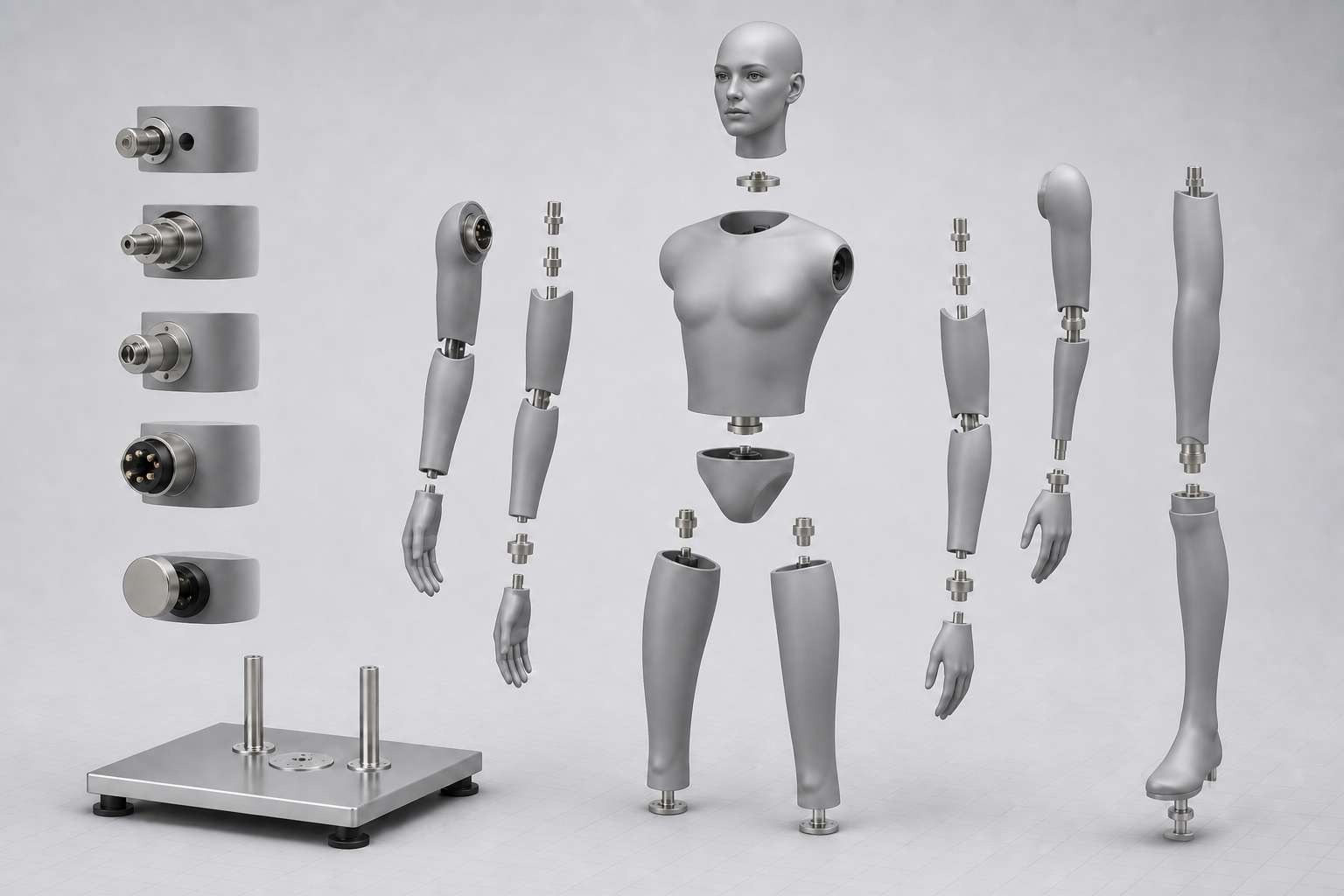
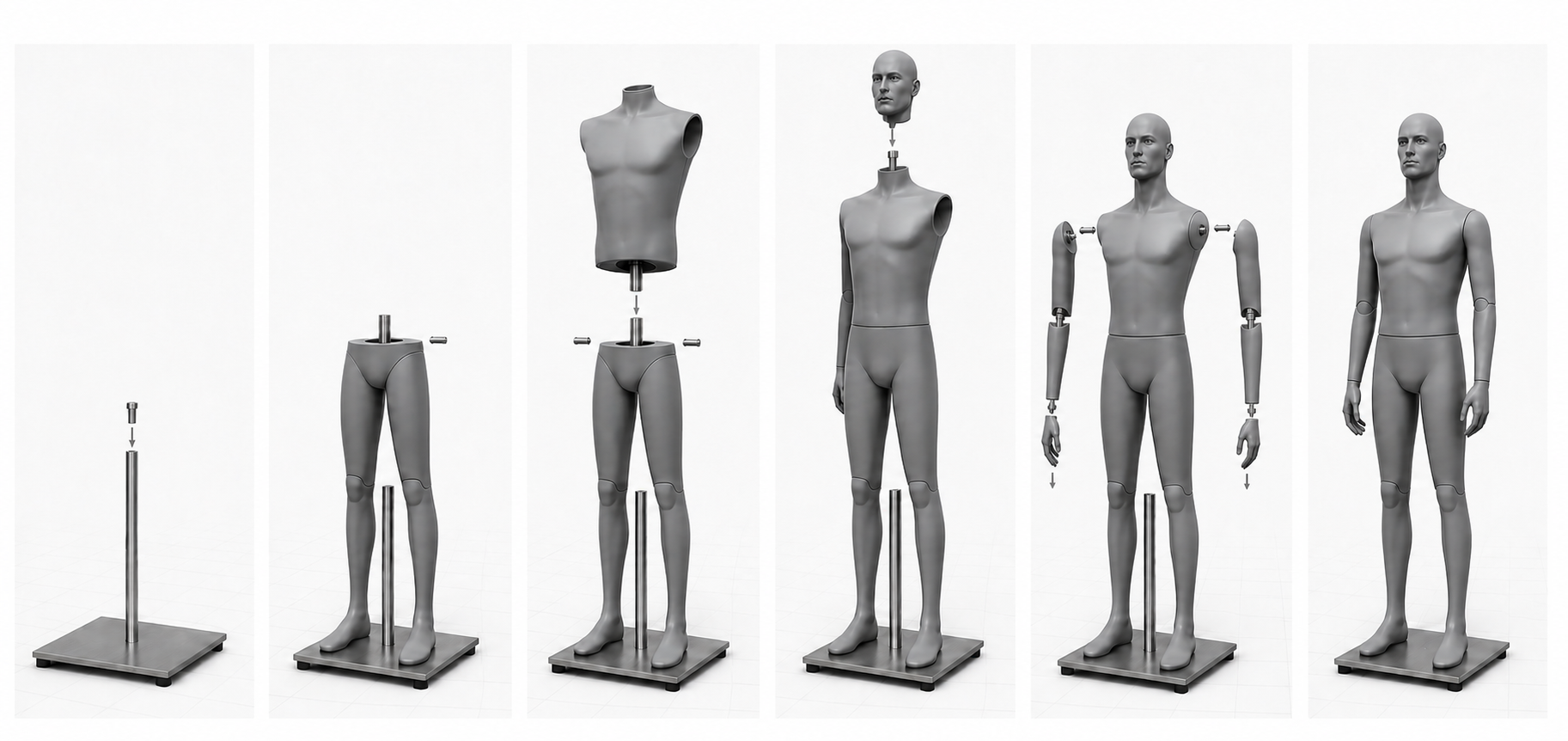
A modular FRP and PU shell, load-bearing metal parts, bayonet joints and separate hands. Magnets only locate components; a mechanical lock carries the load.

04 / product line
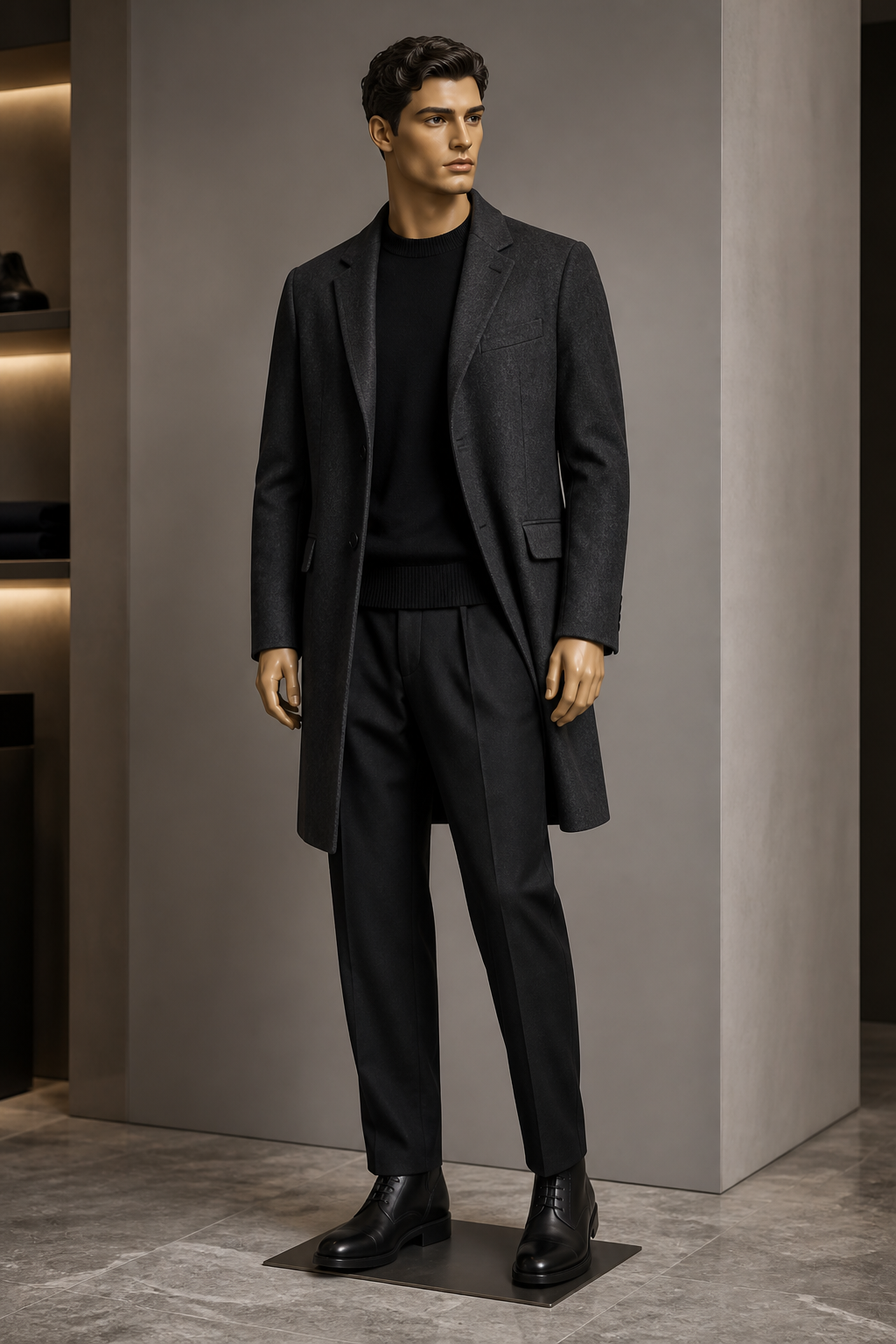
The first run should start with Standard Real: the intended visual result without excessive service risk.
FRP/PU body, hand-finished skin, removable arms and hands, molded hair or a smooth head.
Advanced painting, glass eyes, interchangeable heads, detailed hands and local silicone zones.
Silicone zones or full silicone skin over a rigid structure, with hand-punched hair.
05 / materials and specification
Silicone alone does not make a mannequin convincing. The result comes from precise form, surface preparation, layered color and controlled sheen.
| Component | Material | Specification | Reason | Control |
|---|---|---|---|---|
| Torso and limbs | FRP / fiberglass | 2.5–5 mm, 2–4 layers, local reinforcement | Rigidity, repairability, serial hand lay-up | Thickness, voids, weight, geometry |
| Face and hands | PU resin | Dense casting with fine detail | Captures eyelids, lips, ears and fingers | Chips, pores, finger distortion |
| Soft zones | Platinum silicone | Face, neck or hands in premium versions | Optical depth and tactility | Tear, tack, pigment adhesion |
| Load-bearing joints | SS 304/316 + Al 6061 | M6/M8, bayonet, anti-rotation | Repeated assembly without play | 250 cycles, torque, pull test |
| Finish | Primer + pigments + clear | Translucent glaze layers, satin matte | Skin reads as volume, not flat color | 2700K / 4000K / 5600K |
| Packaging | EPE/EVA + crate | Separate inserts and soft sleeves | Protects fingers, face and clear coat | Drop / vibration pilot test |

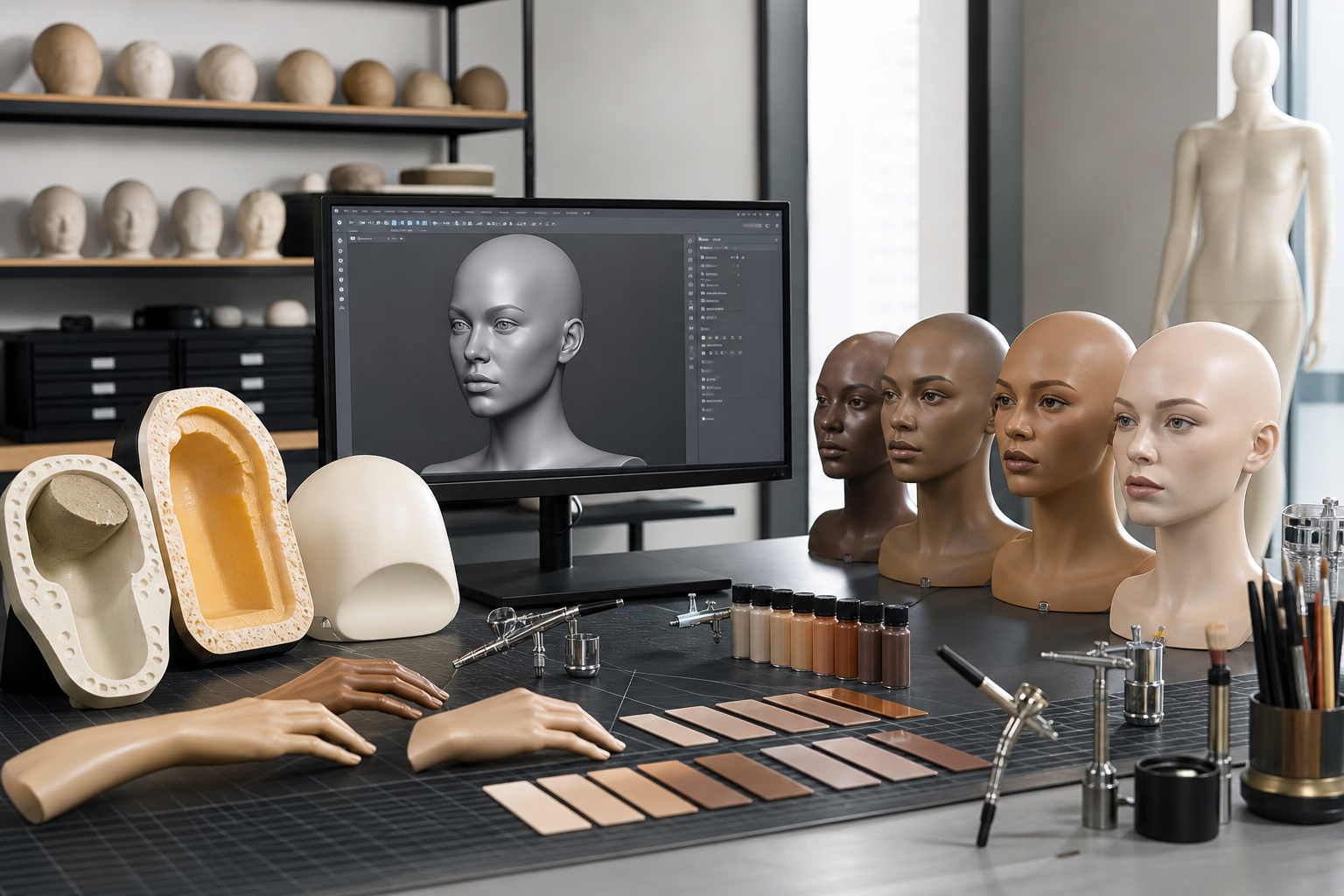
06 / skin system
07 / tone library
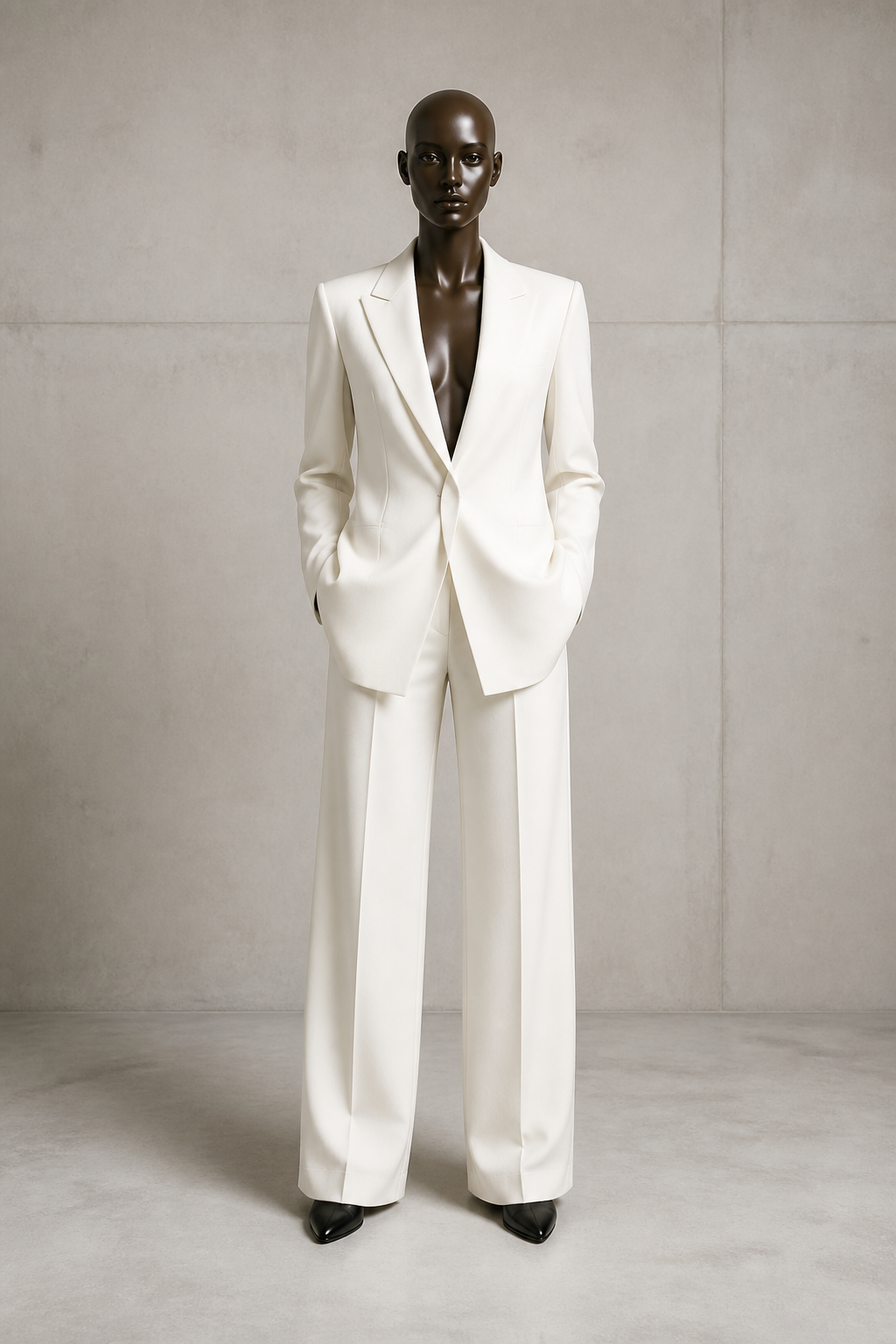
Deep skin needs warm transitions on raised areas, cool shadows and a controlled satin highlight. A single dark-brown coat looks flat.
08 / manufacturing route
Prototype work and quality standards stay close to the core team. Once the first article is approved, repeatable FRP work can move to a specialist OEM.
Size grid, garment fit, pose, balance and retail scenarios.
Body, original faces, hands, mold seams and concealed joints.
Wall thickness, inserts, connectors, base and paint allowances.
Large-format print or CNC, sanding and surface approval.
Split composite molds, hand tooling and connector jigs.
Gelcoat, hand lay-up, PU castings, embedded inserts and trim.
Primer, base, undertones, details, glaze and protective clear.
Joints, stability, lighting, fit test, packaging and product passport.
09 / where to produce
A dedicated factory is unnecessary. The project needs a small control studio and suppliers governed by clear first-article criteria.
| Stage | Recommended location | Logic | Output |
|---|---|---|---|
| Design and prototype | Local studio + specialist CAD/3D suppliers | Fast face, skin and garment-fit iterations | Master and golden sample |
| Molds and pilot | Composite shop near the team or in EU/Türkiye | Close control of seams, inserts and first 5–10 shells | Tooling and pilot batch |
| Serial FRP | Audited OEM in China, Türkiye or Eastern Europe | Hand lay-up expertise and lower repeat-operation cost | Batches of 25 / 50 / 100 shells |
| Finish and QC | Control studio near the sales market | Skin finish carries the value and reputation risk | Finish, assembly and QC passport |


10 / unit economics
The model starts from BOM and labor routing, not a desired sales price. Blue workbook cells can be replaced with supplier quotes.
Formula-driven investor model pending supplier RFQs. Base case: 120 units per year, 55% / 35% / 10% mix, 25-unit first batch and 58% gross margin. Freight and a placeholder duty are included; VAT, income tax and financing cost are excluded.
11 / cost drivers
| Line item | Standard | Premium | Hyper | Comment |
|---|---|---|---|---|
| Direct materials | ≈ $977 | ≈ $1,480 | ≈ $2,382 | FRP, PU, silicone zones, pigments, hardware, base and packaging |
| Direct labor | ≈ $825 | ≈ $1,455 | ≈ $2,574 | Face and hand finishing is the most sensitive operation |
| Tooling amortization | ≈ $427 | ≈ $427 | ≈ $427 | $64k allocated across 150 products |
| Overhead and reserves | included | Overhead, scrap, warranty/rework and FX buffer | ||
12 / complete economic model
All values are in USD excluding VAT. The fields below change annual volume, target margin, first batch and runway; product mix remains 55% Standard, 35% Premium and 10% Hyper.
| Line item | Standard | Premium | Hyper |
|---|---|---|---|
| Direct materials | $977 | $1,480 | $2,382 |
| Direct labor | $825 | $1,455 | $2,574 |
| Factory overhead | $396 | $646 | $1,090 |
| Rejects and rework | $110 | $286 | $726 |
| Warranty reserve | $92 | $155 | $271 |
| Freight, duty and procurement buffer | $370 | $478 | $735 |
| Cash unit cost | $2,770 | $4,499 | $7,777 |
| Development and tooling allocation | $427 | $427 | $427 |
| Fully loaded unit cost | $3,197 | $4,926 | $8,203 |
| Ex-tax price at selected GM | $7,612 | $11,728 | $19,532 |
| Scenario | Units | GM | Revenue | Gross profit | Operating profit | Operating margin |
|---|---|---|---|---|---|---|
| Downside | 60 | 50% | $516,336 | $258,168 | -$57,322 | -11.1% |
| Base | 120 | 58% | $1,229,372 | $713,036 | $328,154 | 26.7% |
| Upside | 180 | 60% | $1,936,261 | $1,161,756 | $683,669 | 35.3% |
The selling prices validate the mathematics of a 58% gross margin, not market willingness to pay. Before an investment decision, obtain RFQs from at least two OEMs, a freight quote for the actual crate, HS classification, a country-specific tax model and 5–10 customer LOIs.
13 / complete launch budget
14 / execution plan
Start with the face, one hand and a tone board. Then build the grey body and joints. The finished prototype follows only after form and assembly tests pass.
One head, one hand, 12–18 color panels, adhesion and lighting tests.
Gate: face and skin approvedGrey full-body prototype, joints, base, balance and three fit-test cycles.
Gate: geometry and assembly stableMolds, first finished mannequin, 250 joint cycles and packaging test.
Gate: first-article report signed10–25 units, two heads, two skin tones and first customer installations.
Gate: repeat orders and 50+ run15 / assembly and quality
| Test | Method | Acceptance criterion |
|---|---|---|
| Geometry | Height map, key circumferences and joint symmetry | Within the approved tolerance sheet |
| Stability | Base tilt and controlled lateral load | No tipping, foot rotation or residual play |
| Joint life | 250 remove/install cycles for head, arms and hands | Locking remains secure and coating does not chip |
| Color and gloss | 2700K / 4000K / 5600K + photo record | No grey cast, spots or plastic shine |
| Dressing | Three outfits: tailoring, knitwear and dress or shirt | One employee can assemble and dress without damage |
| Packaging | Drop / vibration pilot test | Face and fingers cannot touch walls; all parts are labeled |
16 / risk control
Neutral expression, multi-light tests and an independent review panel before tooling.
Master panels, mixing map, photo archive and measured color tolerance.
Recessed edges, EPDM, controlled gaps and 250 assembly cycles.
Operation-level routing, training against a master and separate customization pricing.
Ownership of CAD and tooling, second supplier and team-held golden sample.
Separate inserts, soft sleeves, labeling and a pilot shipment.
17 / investor proposition
18 / renders and diagrams








19 / project files
This page is the overview. The workbook and technical files contain assumptions, BOM, assembly routing and the RFQ structure.
20 / calculation basis
The links confirm material and process availability and the price gap versus standard mannequins. They do not replace quotes based on our CAD and volume.
Polyester laminating resin price dated June 4, 2026.
PU reference for detailed casting; a current quote is required.
Large-format SLA/FGF availability for full-scale master parts.
Lower market anchor for a serial fiberglass mannequin.
Construction example with removable parts, base and supports.
Assumptions, accuracy limits and mandatory RFQs.
21 / other projects

An aggregator of world music news: it collects 167 sources (RSS, Google News, Discogs), determines each story's country and genre through MusicBrainz, moderates before publication and sorts by country, genre and source.

A design system for the signs of state institutions: colour by field of activity, its own typeface, a single coat-of-arms template and a constructor that exports production-ready EPS. Pilot: Tatarstan.

An interactive speculative project: a system describes a human through four processes — sleep, fuel, connection and protection — builds a model, tries to optimise it and admits its own limit. 49 states, 40 photographs, ambient sound, not a single score or ranking.

A large audio suite from Aurveda Audio: 31 effects and 23 instruments with a unified DSP engine, a shared UI system, and its own sound language.